

There are lots of areas that we can look at incorporating more sustainable ways of living such as fashion and homeware. There has been a lot of talk recently around the area of sustainability, especially within the travel industry, with many businesses and individuals looking at different ways of reducing their carbon footprint in order to achieve net zero by 2050 or sooner.
Globally we emit approximately 50 billion tonnes of greenhouse gasses every year, so in order to prevent climate change, and have any chance of securing global Net Zero by mid-century, we need to look at ways of reducing our greenhouse gas emissions. Travel and transport is responsible for 16.2% of global greenhouse gas emissions (Source: Our World in Data), with 11.9% due to road transport, 1.9% due to aviation, 1.7% due to shipping, 0.4% due to rail and 0.3% due to pipeline.
How can we travel more sustainably?
There are lots of ways that we can look at reducing our transport emissions and travelling more sustainably, both personally and within the workplace. During the pandemic, many businesses travel emissions were reduced due to the lockdowns and people working from home. Since we have started to get back to normal and return to the office, the carbon footprints of organisations will have started to increase again, however this will be reduced due to people finding alternatives or travelling less.
Many businesses have adopted hybrid working and allow their employees to work at home and in the office. The use of technology has also increased which has allowed people to do meetings via zoom or teams where they would have previously travelled to do this. This is great at not only reducing their carbon footprint, but also saves them time and money, by removing the need to travel to meetings.
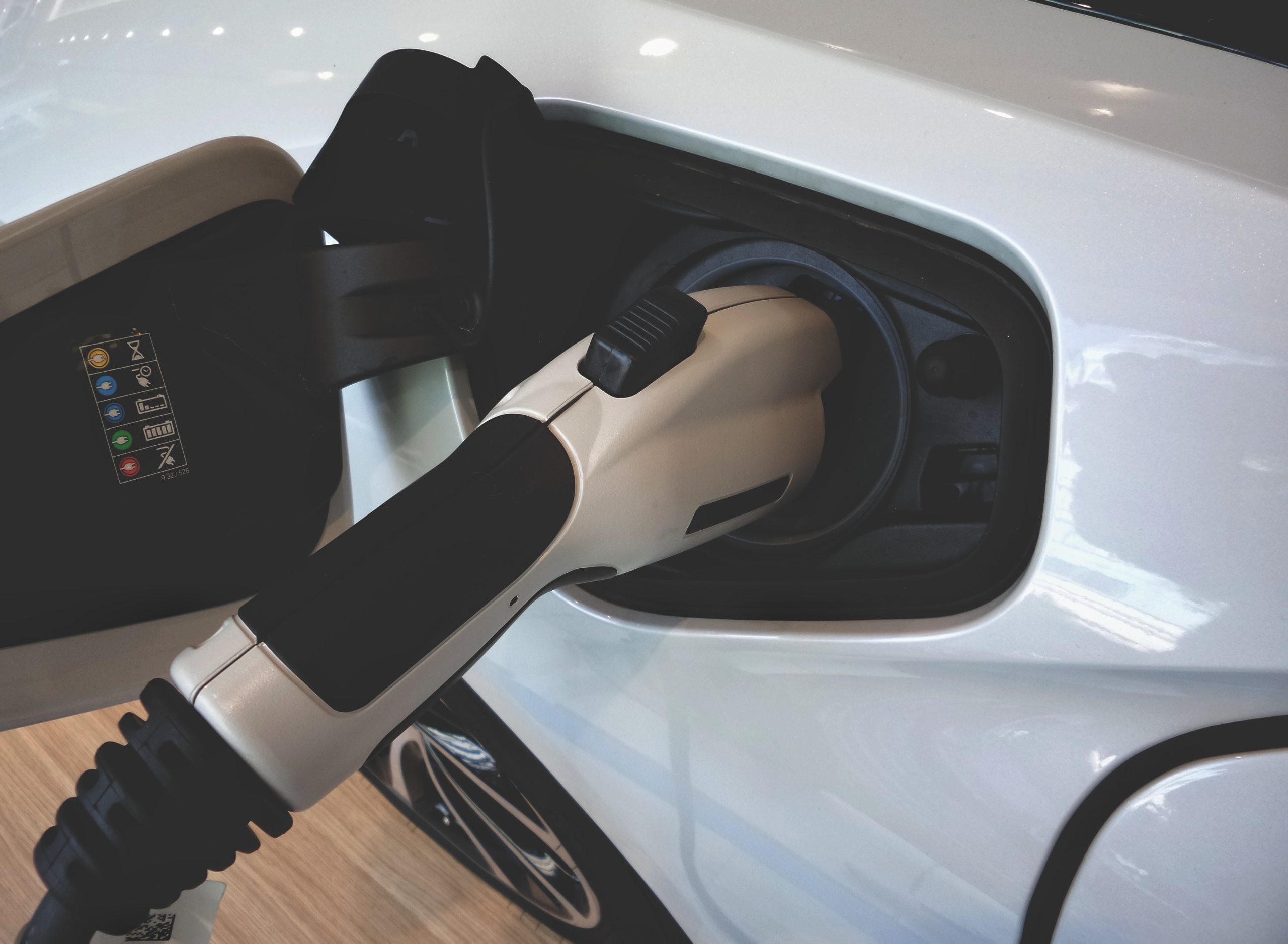
Electric Vehicles (EV’s)
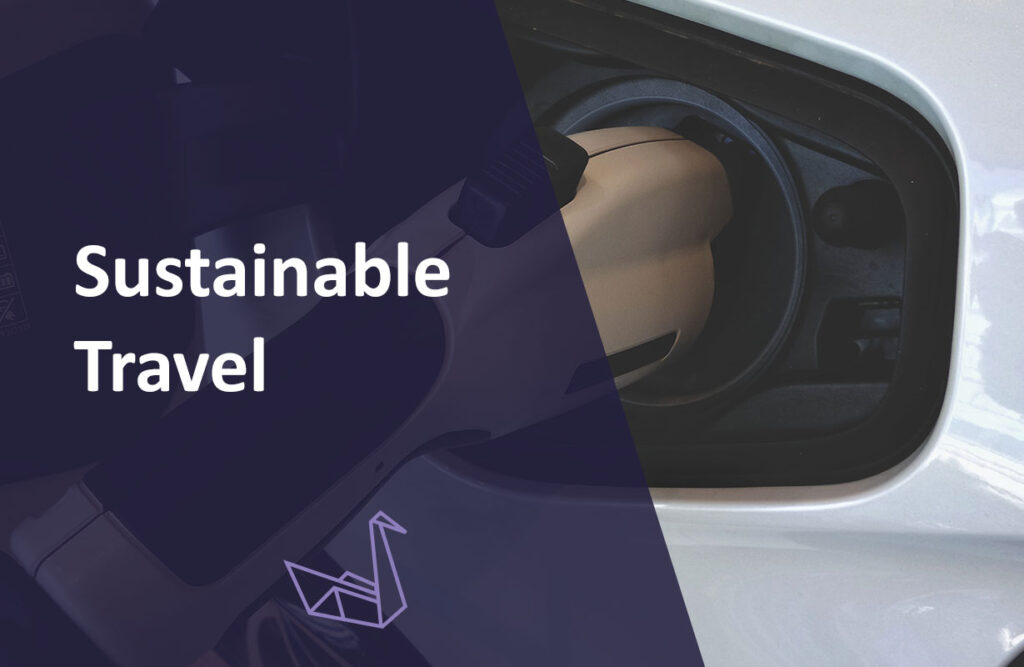
We are all aware now that by 2030 all new petrol and diesel cars will be replaced by electric vehicles, which is one of the ways that the UK Government is hoping to achieve its ambitious target to be carbon neutral by 2050. In principle, this is a great thing although the running costs and costs to charge need to be taken into account.
There has been talk recently about electric car owners being called on to help the UK in times of peak demand, with the Government allowing the National Grid to drain electric car batteries and release the energy back to the grid. This is currently only a trial which is due to take place from April to June, but it does raise questions, such as how car owners will be paid for this energy, and also how will this impact their own usage. If their cars are being drained of their energy, what happens when the car owners need to use their cars.
Hydrogen powered V8 engine
Toyota and Yamaha are currently developing a hydrogen fuelled V8 engine, which would allow it to be powered using compressed hydrogen instead of petrol, providing a greener, more carbon neutral option for high performance cars.
How Indigo Swan can help your business on your journey to Net Zero
Indigo Swan can help businesses who are looking to reduce their carbon footprint and / or switch to a ‘Green’ energy supplier. We have access to a wide array of tools and resources and can help offer support and advice to help businesses on their low carbon journey.
We work with an array of energy suppliers so from finding the right supplier, to checking and negotiating contracts we are here to help your business be greener.
Contact one of our friendly swans today to see how we can help you on your journey to becoming Net Zero.