

By 2030 the familiar grumble of petrol and diesel cars will be replaced by a gentle whirr of electric vehicles (EVs). The purpose is to accelerate the UK towards its ambitious Net Zero target to be carbon neutral by 2050 by replacing polluting vehicles with greener alternatives. Around one third of the UK’s carbon emissions come from transport, so it is a significant area for carbon reduction.
Around 1 in 7 new cars is now an EV (Source: National Grid) and it is believed that by 2040 there could be 36mn EVs on the road. As well as being better for the environment, EVs have lower running costs than “normal” cars.
How will electricity networks cope?
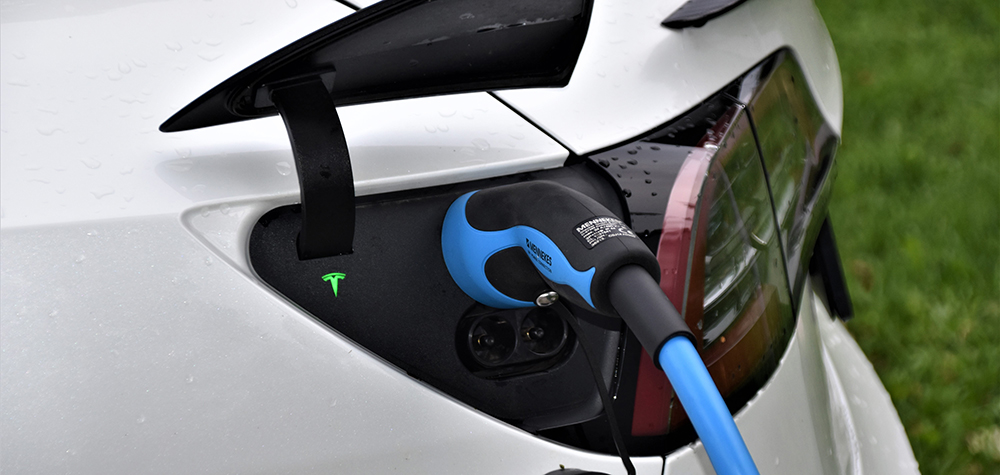
There have been concerns about whether the national grid can cope with an increase in demand owing to the ageing infrastructure and high cost for upgrades. The UK is gradually being more efficient in energy usage, with a 16% reduction in peak electricity demand since 2002 (Source: National Grid). Total capacity across the grid is at a sufficient level to allow for a national roll-out of EVs, but the difficulty comes when every EV owner wants to charge their vehicle at the same time.
Currently peak demand on the grid is between 6pm and 8pm. Everyone is home from work and cooking dinner. What happens when the EV on the drive is plugged in too?
National Grid, operator of the electricity transmission system, is making sure the network is up to scratch but recognises targeted investment is needed. There are around 30,000 public charging points across the UK, but high-speed charging points at motorway service stations are a key factor to accelerate the roll-out of EVs. The latest cost estimate puts this investment of 50 charging points between £500mn and £1bn.
How can I run an EV at the lowest cost?
The upfront cost of an EV is still noticeably higher than the equivalent “normal” car. Government subsidies help, but the premium makes you wonder if it is worth it. The Chancellor has earmarked around £1.3bn for EV subsidies, including £3,000 off the upfront purchase cost.
Depending on your electricity contract and when you charge your EV, the fuel cost could be around 3.7p/mile whereas as petrol equivalent would be around 14.2p/mile. EVs are tax free, giving an instant annual saving of £100s. As there are no moving parts, servicing an EV is also cheaper but you will probably spend more on tyres (weighty car batteries and instant torque through acceleration means pricey tyres!).
A detailed cost comparison is available through buyacar.co.uk.
Is an EV right for me?
Your next car will likely be a hybrid or an electric vehicle. Have you considered:
- How far you travel on a typical journey? Most EVs have a range around 200 miles; plenty for a typical 20-mile commute but possibly not enough for a fleet vehicle.
- How will you charge the car? You’ll need a safe parking space near your home or workplace, where you can install a charge point and run a cable to your EV. You’ll need to plan charging points for your longer journeys, including Plan B if you encounter a traffic jam.
- What your driving style is like? You can improve your EV’s range by smooth, slow driving. Quick acceleration and heavy braking will drain your battery, leaving you to suffer “range anxiety”.
If you want information for installing EV charging points in your business, please contact us.