

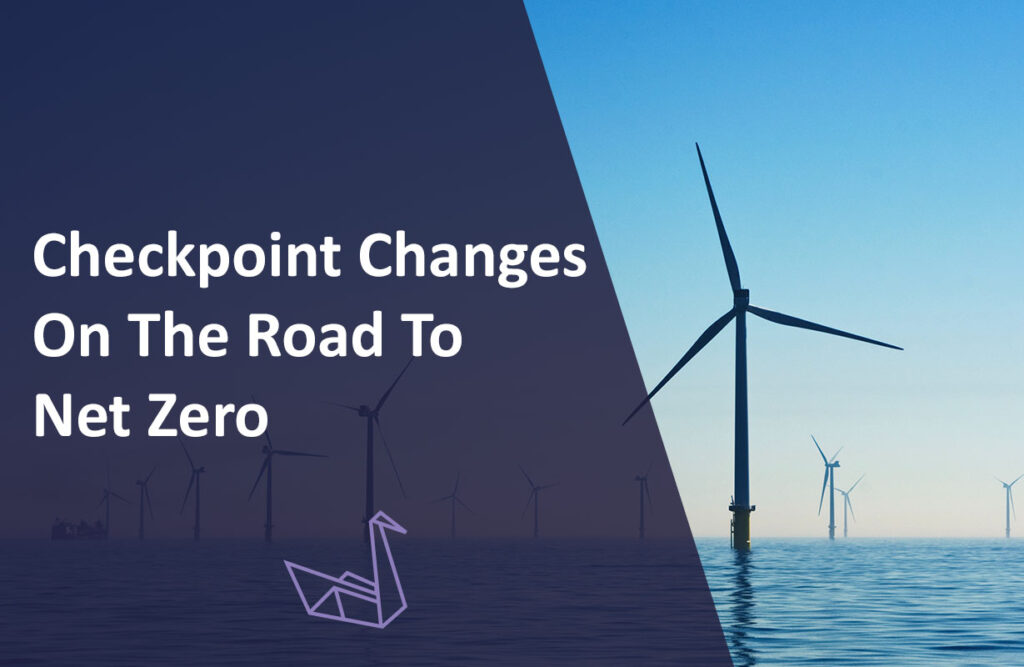
We all thought the legally-binding commitment to reduce UK carbon emissions to Net Zero by 2050 was ambitious, but now the Government has committed to a 78% by 2035 (against 1990 levels). The latest Carbon Budget, published on 20 April, now commits the country to a very challenging interim target on our journey.
Following recommendations by advisory body the Climate Change Committee (CCC), emissions between 2033 and 2037 must be more than three-quarters of the way towards Net Zero. Currently the UK is working towards a 68% reduction by 2030 (fifth carbon budget), which is among the highest reduction target by a major economy. The government said the latest target was “world-leading”.
The UK was the first country in the world to enshrine carbon reduction commitments into domestic law, through the 2008 Climate Change Act. This latest Carbon Budget includes international aviation and shipping emissions for the first time. Including these emissions is vital if the UK is to remain on-track with its commitment under the Paris Agreement. This global treaty limits global temperatures rises to 2°C, but ideally 1.5°C.
As a country, we have out-performed previous Carbon Budgets (first 2008-12 and second 2013-17) and appear to be on-track for exceeding targets set for the third (2018-22). But each check point so far is significantly lower than the ambitious sixth Carbon Budget. From a starting point of a 25% reduction in emissions by the end of 2012, to a position of 37% at the end of 2020, a jump to 78% within 15 years is no mean feat if we are to achieve it.
Various recommendations have been provided to give us the best opportunity to reduce carbon emissions.
The CCC has given the Government four steps to follow:
• Improve the take-up of low carbon solutions. Electric Vehicles, boiler replacements, moving away from fossil fuels (or implementing carbon capture and storage technologies) will all help.
• Move to low carbon energy supplies. The ambition is for UK electricity production to be zero carbon by 2035. Focus will be put on offshore wind and other clean electricity solutions. Hydrogen is also required to help with the mix, although the technology is still in its infancy. Hydrogen may replace higher-carbon gas in heating and could be used as a shipping and transport fuel. UK renewable electricity generation has increased four-fold since 2010 and low carbon electricity accounts for over 50% of total generation.
• Reduce carbon intensive activities. Energy efficiency in buildings, diet/ land-use change (specifically for high carbon meat and dairy production) and a reduction in car miles travelled will all be necessary.
• Remove land and greenhouse gases. The CCC says we need an increase in mixed woodland to remove carbon from the atmosphere, to 18% of all UK lands by 2050 (from 13% currently). Agriculture and farmland will need to be transformed too.
A further Net Zero Review is expected later in 2021 from the Treasury. This exercise will set out Government plans to maximise economic growth opportunities from the transitioning to Net Zero. It will likely be published ahead of the next global climate summit, COP26, which is happening in Glasgow in November 2021.
Please get in touch if you’d like to find out more about switching to a green energy supplier or if you’d like help on your journey to net zero.
More information:
www.theccc.org.uk/about/our-expertise/advice-on-reducing-the-uks-emissions/
www.theccc.org.uk/publication/sixth-carbon-budget/
www.gov.uk/government/news/uk-enshrines-new-target-in-law-to-slash-emissions-by-78-by-2035