

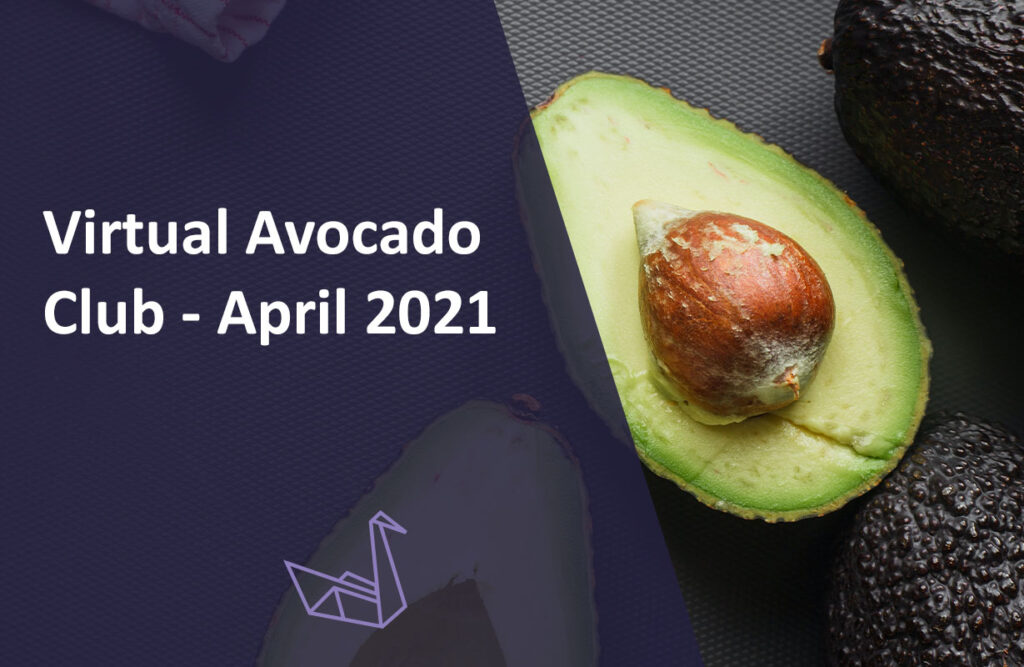
A few weeks ago we had the absolute pleasure of speaking with Lisa Collen, Director of People & Workplace at Flagship Group as part of the bi-monthly Avocado Club event to talk about how to look after employee’s wellbeing and enable great people to do great things. Her enthusiasm and passion for what she does shone through in the interview and her dedication to her staff was refreshing and positive to hear.
Not only did we have an interview but we also had Sara Matthews who gave us a live cooking demonstration of a gluten-free, plant based, avocado inspired recipe. We have summarised some of the key points below.
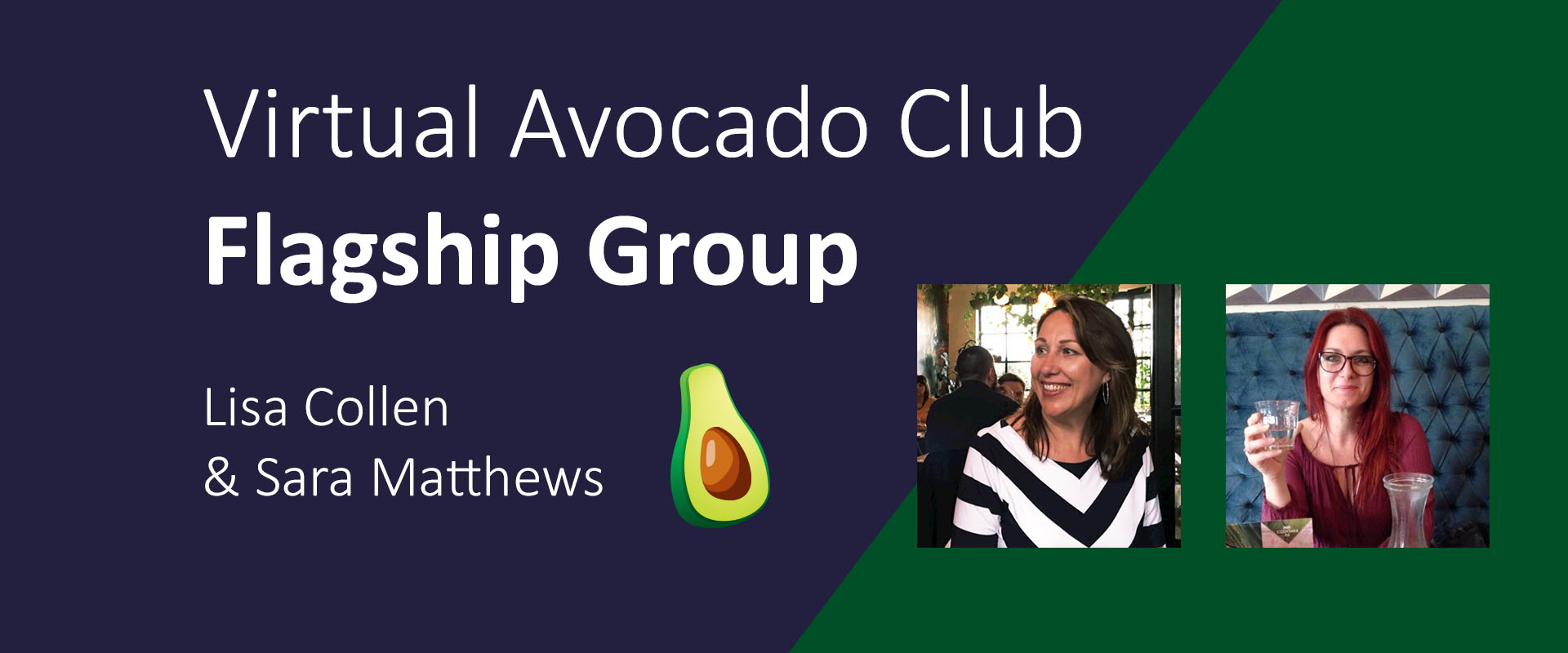
Would you like to introduce yourself and what your day-to-day looks like at Flagship
Thanks James, I’m delighted to be here, it’s a real pleasure to come and talk about our people and the work we’re doing at Flagship. We’re a Housing Association and we cover the whole of East Anglia. We’ve got about 32,000 homes now and they’re predominantly social homes, but we also have market rented and we also build for sale so it’s a great industry. Our whole purpose is around providing homes and developing sustainable communities across the East of England and our ambition is to solve the housing crisis.
We’re starting to come out of lockdown and some people are starting to get back into the office or thinking about returning to the office, we know you guys do a lot of work around your well-being and looking after your employees. What would you say are the three most important factors that an employer needs to consider when it comes to their employee?
When we were in the breakout group, we were talking about the businesses that have looked after their people and that doesn’t mean in a nanny state, that means just treating them as individuals and as adults. I think what we’ve seen is the well-being industry has absolutely flourished, particularly over the last five years. I think as businesses we suddenly think that must be something we should do, and I know of examples where people have just put a plaster over the issue. Actually, I think with well-being it’s about looking at the root cause, what’s the cause of the distress. The opposite to well-being and wellness is distress, so what’s the root cause for that distress, but also then looking at what is it that you’re doing that makes some people feel fulfilled, valued, engaged and motivated and not burnt out. Some of us have been burnt out over the last year because it’s been un-relenting, so looking at the causes of what makes the employees feel that sense of value, and fundamentally I think it comes down to good leadership.
I think the top three things are to trust your people, do what’s right and treat them as adults. It’s great to put zoom yoga classes on and have a mindfulness app and I’m not dissing that at all because I think those little techniques enables us to feel connected, but I think if you’re trusting your people you’re talking to them regularly you’re doing what’s right. You’re treating them as individuals and more importantly treating them as adults and letting them manage their own well-being but you create the environment which enables them to flourish.
What different tools and things do you use at Flagship to give your employees a voice and is there anything specific that you’ve used in the last year that maybe you didn’t before?
For us it was more getting Managers to trust their people and I think this last year has absolutely shown us that people can work from home and we have to trust them to do the right things. Some of the things we’ve done is to recognise that blended work life that we’re all living in right now. One example is being a mum and being an employee. We have to recognise as employers that people are individuals and they have lives outside of work and that blend of work and life has got closer than it’s probably ever got, but we’re able to do it. We’re enabling our people to do it. Some of the things we’ve done is we’ve created projects. We said to people if you’re interested in it and you’re passionate about it come and work on it and we do the projects, as such our continuous improvement. We have an improvement review, we’re trying to improve this part of the business and this process. If someone’s passionate about it come and join in and then enabling Managers to go okay that individual is going over there to work on a specific project for the greater good of the business. So yes, I can’t afford to lose them but it creates opportunity for them to develop and it also creates opportunities for others within my team to step up so we’re trying those sorts of things. We’re measuring the impact that they are having and measuring staff satisfaction and importantly customer satisfaction. We’re looking at efficiencies and productivities trying to measure the impact of the investment and what we’re seeing is people are growing. They’re developing, they’re feeling connected, they’re seeing the wider business and not just stuck in their sort of silo functional world so it’s those sorts of things we’re doing.
You mentioned about being connected, how do you measure that at the moment?
We do some standard surveys and recently we’ve done some surveys asking staff how they feel about the way we’ve treated them during the pandemic, how do they feel about this particular initiative. We look at the connectivity, so how many people are joining the lunch and learn sessions, how many people are putting demands on certain systems like training and development. Once a year we also do a cultural survey but we’re learning that just once a year on a survey doesn’t give us the richness or the depth of what we want to understand so we do focus groups and we say we’re having a discussion about this particular topic at this particular time. It could be on for example equality, diversity and inclusion and then we’re seeing who’s dialling in and who wants to come and talk about it. Most importantly James we’re listening to our people. It’s about listening and as leaders I think sometimes we forget to listen because we’ve got a whole workforce out there of great ideas so let’s use them.
What do you see being your biggest professional challenge this year, either you personally or as a group?
Solving the housing crisis in the East of England would be a good start! When I joined the Housing Association I’d never worked in Social Housing and I had a perception it was just going to be like a local authority, I’d stay for a couple of years and then I’ll go back to the commercial world. I’ve been here eight years and I’ve seen this business transform from a very parental style of leadership to a more adult style culture where we trust our people. I think that sets us ahead of the curve from a number of employers in trusting our people to do the right things. I want people queuing around the block coming to work for Flagship. They might just come in and do a project and go again they might be self-employed and they might just come and work with us for a while and go again, but as the world of employment is changing I think our biggest challenge is how do we set ourselves apart from other employers. There’s a number of Housing Associations in the East of England and now we’re all remote we could work anywhere; we’re not just constrained by geography. One of my biggest professional challenges is what’s next for us as a business and how we can continue to attract the best talent. Also, how we can retain the ones we’ve got, how we can work in a way where we’re doing more. The future of work is a huge focus for me and that’s split into four parties. The future employee, the future talent, the future leader and the future workplace. Do we need what we’ve got and do we want to continue to use it in the way we’re using it.
I was going to say because anyone who has not been to Flagship, when they open again go and visit because your workspace is wonderful, it’s a very nice office, I love it, very colourful. If that does not come back, how do you get that feeling without everyone being there?
We had this whole open plan layout with different zones, so you know where your team are likely to be sitting, but what we’ve found out through this time is that people are quite happy to work from home and work from home effectively and efficiently. The way we’ve structured the office has to change and we need to make sure we’re embracing the digital agenda. That means that whether you’re sitting at home and joining a meeting or you’re sitting in the office and at the same meeting you’re able to have the same experience. We’ve got to make sure that our office space is probably more for collaboration and innovation events rather than desks and a regular place to work. We need to reconfigure the office we need to make sure that we’ve got more open spaces for people to come together just to chat and to come together just to feel connected or to work on a problem together that they’re passionate about. We had open-plan upstairs for eating, we said to people we’d rather you use your eating time as a place to come together with people you wouldn’t normally speak to. The extroverts amongst us would be in the middle on the tables talking chatting to everyone and every day the introverts amongst us would be sitting with their backs against the wall on the outside of the eating area with the headphones on with the headstand and we didn’t acknowledge that at the time so we need to create some more quiet spaces we need to make sure that the workplace is what we want it to be used for and not how we first envisaged. It’s about using the digital technology it’s making sure that it’s a place to collaborate and innovate but it’s also a place where people can come and work and get their head down and do some stuff.
You talk about the extroverted introverts and that’s a really interesting thing for me. With the introverts, how do you entice them back how do you entice them back into a working environment that is maybe more set up for an extrovert.
I think the quiet spaces are absolutely the way to go. It’s about having spaces where people can come in get their head down, not be so open plan and it’s about treating people as individuals and not saying one size fits all. Not every introvert will want to be at home alone, and not every extrovert will want to be surrounded and get their energy from people every single day. It’s about recognising that we are individuals and there’s the ambiverts that sit in the middle you know they get their energy from people but then they want their quiet time. It’s just about not putting a label on groups of people, it’s saying what’s right for them.
How do you see the flexibility of flagship adapting over time, did you see it being fully flexible or do you see there being some structure and how does that look?
The board and I have had numerous conversations over what I mean when I keep saying a blended approach. When we did agile working, we were probably 80/20 working from home and in the office. I think what we’re likely to see is more of a 50 50 split. It’s about asking our people to ask themselves three things, what does the business need of me today, what do the customers need of me today and what do my colleagues need of me today. If they don’t need you to be in the office then you don’t need to be but it’s got to be business first but most importantly giving people choice and giving them the technology and the equipment and the environment that enables them to still feel connected still feel that they can see the bigger picture to still see that they’re not being overlooked because they’re predominantly working from home. The biggest challenge is enabling the Managers to manage remote blended teams.
When I’m doing my one-to-ones and talking with my people, I make sure that I’m not just talking about work so I’ll ask them the questions around so what are you watching at the moment. I’ve made sure that I’ve remained connected, and I’ve not been afraid to say to my team I’m having a bad day and just really struggling. When we were in complete lockdown I was absolutely inundated with how that was received. I felt a bit vulnerable that I was putting myself out there. Some days it’s really tough and yet the feedback was tremendous saying we didn’t realise that you would ever struggle and you telling us that you struggle has enabled me to feel that I can say it out loud as well. In a bizarre way that’s quite motivating.
What’s the best thing to come out of the last year for you personally and the best thing to come out the last year for Flagship?
I think the for Flagship, the last year has proven that we can adapt and adjust and pivot and progress and still deliver amazing service. On a personal level the best thing is probably taking up running, meeting new people, where I don’t have to travel three hours to get into London or get on a plane. I’ve definitely met more new people in the last year doing like stuff like this more and attending online events, more than you would if you go to a networking event. With these online events you now have a wonderful opportunity to speak to a lot more people in a shorter period of time as well which I think is lovely.

Spicy Baked Avocado Wedges
Serves two
- 2 Avocados
- 80g shredded coconut
- 3 tbsp aquafaba (the juice from a can of chickpeas)
- 1 tsp gluten free mustard (I used Dijon)
- 1 tsp maple syrup
- 1 tsp smoked paprika
- ½ tsp ground chilli powder or dried chilli flakes
- Salt and pepper
- Zest & juice ½ a lime
Method:
- Pre-heat the oven to 200oc / gas mark 6. Line a baking tray with parchment.
- Cut the avocados in half and carefully remove the stone and remove the skin. Cut each half length-ways into 4-6 wedges. Place in a bowl and cover with the lime juice and turn making sure to coat the wedges. In another bowl add the aquafaba, maple syrup, mustard, spices salt and pepper and whisk to combine and until smooth. On a plate place the coconut shreds and lime zest. Taking one piece of avocado at a time dip in and coat in the aquafaba mix then roll in the coconut making sure to coat the avocado slice then place on the prepared baking sheet. Repeat with all the wedges. Bake in the oven for 8 minutes until the coating starts to colour golden. Remove and serve hot or cold with mayo.
Vegan Mayo
This mayo is so easy to make and tastes great.
- In a bowl add
- 3 tbsp aquafaba
- 2tsp mustard (I used Dijon)
- Pinch salt
- 2 tbsp apple cider vinegar
- 250 ml rapeseed oil
- 1 tbsp extra virgin rapeseed oil or extra virgin olive oil
Method:
- With a stick blender blitz until it resembles mayo and all combined, should take about 2 minutes. Decant into a glass jar and store in the fridge for up to 10 days. Use as a base and flavour with herbs and spices. I like to add coriander and lime which is a delicious flavour combination with the avocado wedges.
Socca Pancake
This batter can be made up and kept in the fridge for 4-5 days.
- Basic socca recipe
- 1 cup besan flour (also called chickpea flour or gram flour) This is available is Tesco’s for just over £1 a bag so inexpensive
- 1 cup water
- Method
- Whisk to combine, leave to stand for 10-15 minutes to thicken. Whisk again
- Make as you would a normal pancake
- Make sure your pan is VERY hot, if you have a good pan there is no need for oil
- Pour a little of the batter into the pan and swirl round to coat
- Once it changes colour, use a spatula to lift the edges then flip over
- You will be able to see the colour change. It will get darker and matt when its ready to flip over
- It only needs to be cooked for a couple of minutes each side
These pancakes can be made in advance then heated before you serve. They are great cold and used as a wrap. If eating them cold make sure they are thin. Also maybe layer them to make a savoury layer cake. Pancake/chilli or spicy beans/pancake/smashed avocado/pancake/salad/pancake.
You can also add to your batter. Spice it up with curry powder or smoked paprika, maybe some herbs. Just after your batter has been put in the pan sprinkle on some chopped spring onions, torn basil or fresh herb.
The batter is a base for you to add your own flavour combinations too.
Enjoy!