

Solar power has become one of the most emotionally charged topics in the UK’s energy conversation. Mention a large solar project and the debate quickly escalates, countryside versus carbon, local impact versus national need. This was true in a recent conversation our Commercial Director, Aimee, had on BBC Radio Norfolk following a discussion around the proposed East Pye solar development.
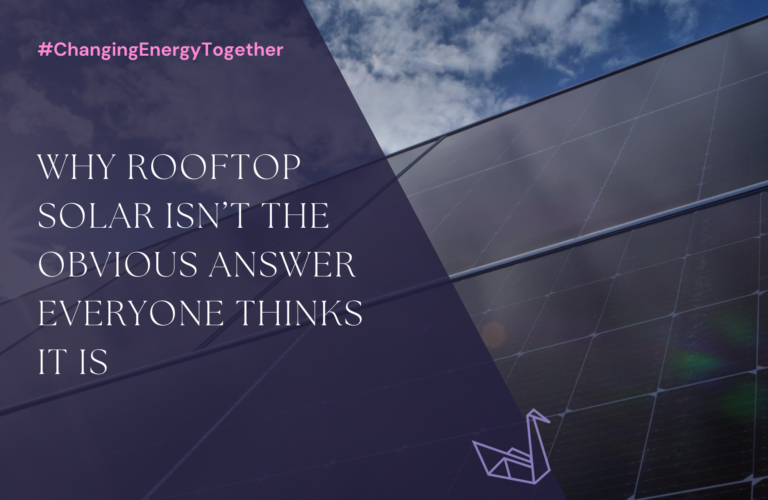
The reality is that the UK currently has around 20GW of solar on the system, enough to power roughly five million homes. By 2030, that figure needs to rise to around 50GW, and by 2050 closer to 90GW. Against that backdrop, even very large solar farms are a relatively small part of a much bigger national transition.
Locally, these projects matter. They change views, land use and familiar landscapes. Those concerns deserve to be acknowledged, not brushed aside. But nationally, the question isn’t whether solar should play a role, as it already features significantly. Typically around 6% of annual UK electricity generation is met by solar panels, with some days even seeing peak generation over 40% of our national electricity demand. But the real issue is whether we’re making joined-up, informed energy decisions that balance short-term discomfort with long-term security.
When people hear about land being ‘lost’ to solar, scale often gets lost in conversation. For comparison, if you took every solar farm in the UK and laid them side by side, they’d cover roughly a tenth of one percent of the country. The equivalent to this is a postcard on a football pitch. Even at our 2050 targets, solar will still occupy less land than is currently used for golf courses. This is why context matters.
This is where energy decision-making too often breaks down. We react to what we can see, not what is systemically necessary. We argue about individual projects without stepping back to ask how they fit, or don’t fit, into a credible national plan.
At Indigo Swan, this is what we see every day with businesses. Energy decisions that are made quickly or without having the full information nearly always cost businesses more in the long run. When organisations slow the conversation down, look at the data and understand the trade-offs, better outcomes follow.
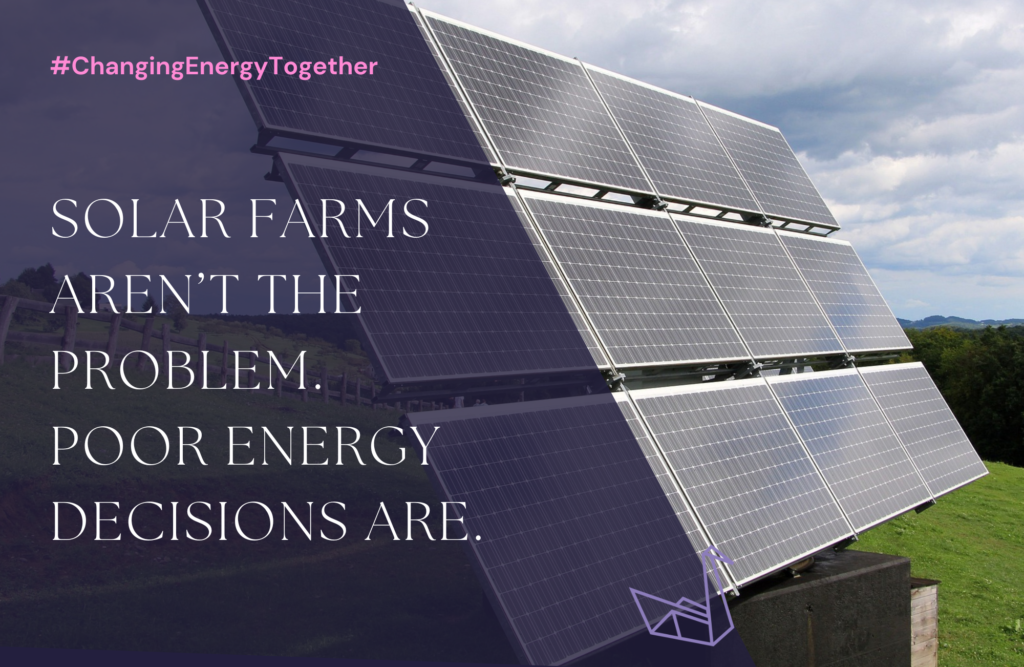
Solar farms aren’t the problem. Poor energy decisions are. And the answer isn’t shouting louder, it’s thinking more clearly.
Looking for more from your energy partner?
Talk to Indigo Swan about how transparent procurement, genuine sustainability, and expert support can deliver better outcomes for your business.
If you enjoyed reading this blog, why not try one of our others: