

Following Aimee’s recent appearance on BBC Radio Norfolk discussing the energy price cap, let’s take a step back from the headlines and look at what this really tells us.
While the cap applies to households, not the commercial market we operate in, it remains a useful indicator of wider energy trends. Read on to be in the know.
What’s changing?
From 1st July to 30th September 2026, Ofgem’s energy price cap will increase by 13%, taking the typical annual dual-fuel bill from £1,641 to £1,862.
It’s important to remember:
This isn’t a cap on total spend, it limits what suppliers can charge for unit rates and standing charges. Actual costs will always depend on usage.
The image below represents the price increase based on the NEW lower forecast domestic usage from July 2026 and the PREVIOUS usage.
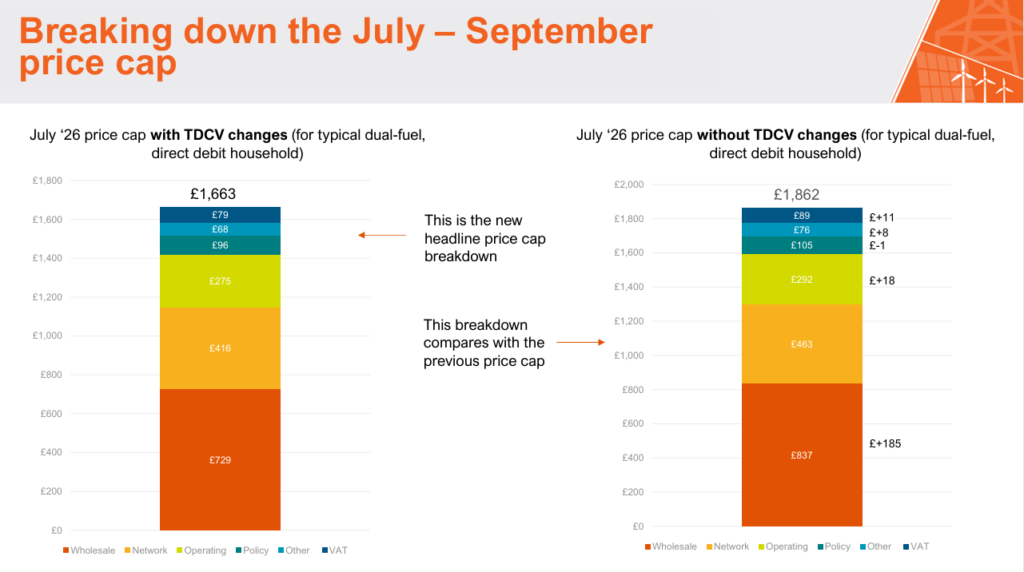
Image Source: Energy UK – Energy UK Briefing_2026 July Price Cap
What’s driving it?
This movement isn’t unexpected.
The price cap lags the wholesale market, meaning current changes reflect pricing conditions from earlier in the year, including increased gas costs linked to ongoing geopolitical uncertainty.
Crucially, this is not a return to 2022 volatility.
The energy system is more stable, with improved supply diversity and increased UK-based renewable generation helping to temper extremes in rates.
What to watch next
A summer increase is typically softer in impact, given lower seasonal demand for gas.
The real pressure point remains Q4, when consumption rises again as temperatures drop, and any pricing movements are felt more heavily.
A subtle but important shift
Ofgem has also revised what it defines as a ‘typical’ household, reducing assumed consumption levels in both electricity and gas.
This reflects a broader trend :
domestic energy demand is reducing, but that doesn’t mean energy is cheaper.
The takeaway
For businesses, this isn’t about the domestic cap itself as these specific rates aren’t available.
It’s about what it signals:
- UK market movements remain reactive to global factors
- Contracting still carries complexity
- Rate stability has improved but volatility hasn’t disappeared
Our view
Good energy decisions come down to three things:
- Visibility: understanding your consumption and taking active steps to reduce it
- Timing: knowing when to act
- Strategy: aligning procurement with your risk appetite
Because ultimately, whether domestic or commercial:
the cheapest kilowatt hour is still the one you don’t use, but the smartest decisions come from clear insight, not reaction.
If you want to understand how these market signals could impact your business energy strategy, we’re always happy to have a conversation – hello@indigoswan.co.uk
If you enjoyed reading this blog, why not try one of our others: