


Headlines:
- Gas and Electricity Wholesale prices have fallen further
- EU Gas Storage levels remain high at 59% full
- Large numbers of LNG deliveries are still being made
Energy Overview
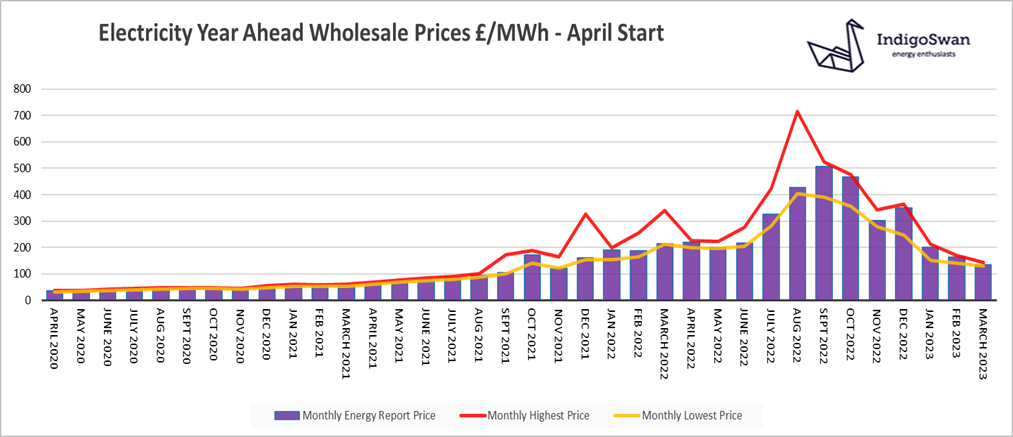
As of the 7th of March, Gas and Electricity Year Ahead Wholesale costs were lower, when compared to last month’s report and back to levels seen in 2021.
Oil has increased from $81 per barrel last month to $83, as supplies remain tight. Demand is expected to increase as China’s economy emerges from COVID lockdowns, with expected growth in the region of 5% in 2023.
EU Gas Storage levels have reduced from 70% to 59% full, which is still significantly higher than the 30% seen in both 2021 and 2022. The EU target for November 2023 is 90%, in readiness for the winter demand, which will require Gas injections through the warmer months. Large numbers of LNG deliveries are still being made to Europe, compensating for the lower Gas flows from Russia, which are instead being diverted to China. This may reduce the country’s future demand for LNG.
As Gas is the main source of generation, the price of Electricity closely follows, despite the contribution from much cheaper Renewables. The growing diversity of supplies, which includes Nuclear and Hydro Imports from the continent, aims at reducing the reliance on expensive carbon sourced generation such as Gas and Coal.
The Met Office forecast is uncertain for March, but generally temperatures will be below the seasonal norm.
What does this mean for me?
The Energy Bills Discount Scheme (EBDS) will be the replacement of the Energy Bill Relief Scheme (EBRS), effective 1st April 2023. It is designed to give all non-domestic customers, including the voluntary sector (such as charities) and the public sector (such as schools and hospitals) access to a phased in maximum discount when the customer’s wholesale cost exceeds the defined thresholds. This will last for 12 months until 31st March 2024 and will apply to contracts that were put in place on or after 1st December 2021 and non-contracted arrangements. Those companies that are classed as Energy and Trade Intensive Industries (ETII) will receive a more attractive discount once applied for. As with the EBRS, energy suppliers will automatically apply these standard discounts. Although the levels of assistance are lower and are based on a high wholesale cost, the price of Gas and Electricity has fallen recently. Please see our Blog for more details.
Over the next year, the way some charges are calculated will change, under the Targeted Charging Review. Energy suppliers can choose whether to fix Electricity contract costs, pass them through or leave that decision until a later date. This does allow for the possibility of a review of the Transmission and Balancing charges in some fixed price Electricity contracts and an increase in charges which were previously recovered through the Wholesale element.
Indigo Swan will be working closely with energy suppliers to help all our customers through this worrying time.
Please contact us on 0333 320 0475 to discuss options or to get a latest update.
Gas market overview
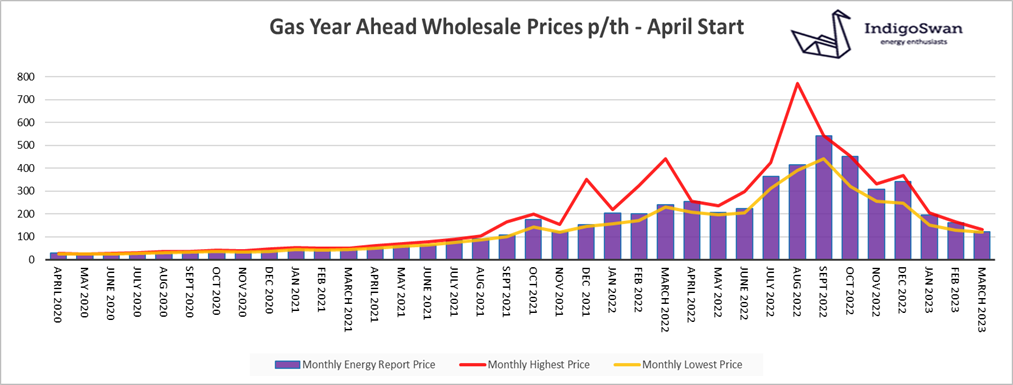
On the 7th of March, the Gas Year Ahead Wholesale cost was 122.30p/th, down from 161.63p/th in last month’s report and 49% less than 2022.
Prices continue their downward trend despite the recent cold spell, which has increased the need for Gas due to the heating demand. There has also been a higher use of Gas for Electricity generation, at 55% so far in March, compared to 35% in February. Record numbers of LNG deliveries have reduced the impact of the reduced Gas flows from Russia. The US Freeport LNG terminal is partially back online with the expected full return in the coming months, helping to meet any additional demands from Asia. Germany is investing in LNG infrastructure, allowing Europe to receive more shipments.
On the 19th of December 2022 the EU agreed a cap on Gas costs at €180/MWh, from 15th of February 2023 for 12 months. It will be triggered should the price exceed this for three days and be €35/MWh higher than the price of LNG. This is designed to prevent prices reacting with the extreme volatility that we saw in 2022, which has created considerable global economic issues and provided Russia with resources for their war effort.
The chance of some price volatility remains, which may come from increased hostilities in Ukraine. This could impact on the pipeline delivering Gas from Russia, reducing the amount available for Storage in Europe.
Let us know if you would like us to research your options for 12, 24 and 36 month contracts.
Electricity market overview
On the 7th of March, the Electricity Year Ahead Wholesale cost was £133.50/MWh, down from £163.24/MWh in last month’s report and 37% less than 2022.
February saw a small increase in the amount of expensive Gas that was required for generation, at 35%, although this has increased further to 55% so far in March. This is largely a result of a decline in Wind at just 13%, with the outlook for the remainder of the month being uncertain. Should there be further disruptions to Gas supplies, for example, the closure of the pipeline through Ukraine, then Electricity prices will follow Gas higher.
The availability of French Nuclear power helped increase Imports to 14% in February, far higher than previous months, removing the need to trigger the use of more expensive forms of generation in the UK. So far in March this is 10%, although there is the potential for some disruption due to strike action in France.
The National Grid has mechanisms in place to help avoid power shortages and has taken additional steps to make Coal generation available on demand. These measures do come at a cost premium, in the form of higher third-party charges within bills, but provide an element of stability to prices which otherwise may react even more dramatically.
Let us know if you would like us to research your options for 12, 24 and 36 month contracts.
If you enjoyed reading this blog why not try one of our others: